
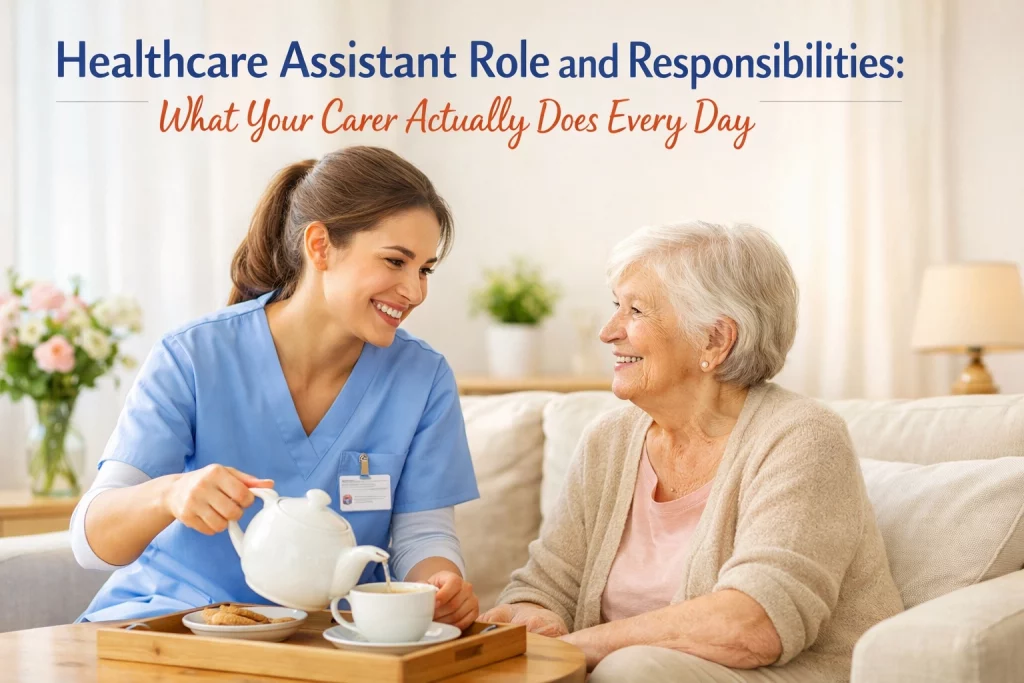
When you're bringing a healthcare assistant into your home or your loved one's life, you want to know exactly what they'll be doing. Not just the official job description… the actual, day-to-day reality.
Healthcare assistants are the hands-on support that keeps people living independently, comfortably, and safely in their own homes. They're not nurses. They're not doctors. But they're often the person who spends the most time with your family member, notices the small changes that matter, and makes sure everyday life runs smoothly.
At BestCare24, our healthcare assistants do everything from personal care to companionship, all while keeping dignity and independence at the heart of what we do. Here's what that actually looks like.
Personal Care: The Foundation of Daily Support
Personal care is often the first thing people think of when they hear "healthcare assistant"… and yes, it's a core part of the role.
Your carer helps with bathing, showering, dressing, and grooming. They assist with oral hygiene, hair care, getting in and out of bed, and changing clothes. For someone who's recovering from surgery, living with limited mobility, or managing a chronic condition, these tasks aren't just about hygiene. They're about maintaining self-esteem and feeling like yourself.

Our healthcare assistants are trained to provide personal care with sensitivity. They work at your pace, respect your privacy, and involve you in decisions wherever possible. It's not about doing things to someone… it's about doing things with them.
This includes:
- Help with washing, bathing, or showering
- Support getting dressed and undressed
- Assistance with toileting and continence care
- Oral hygiene and denture care
- Shaving, hair brushing, and general grooming
- Nail care and skincare
The goal? Helping you feel clean, comfortable, and confident every single day.
Monitoring Health and Spotting Changes Early
Healthcare assistants aren't clinically trained nurses, but they're often the first people to notice when something's not right.
Because they see you regularly: sometimes multiple times a day: they get to know your baseline. They know your routine, your usual mood, your normal energy levels. So when something changes, they spot it.
Your healthcare assistant will monitor and record things like:
- Blood pressure
- Pulse and heart rate
- Respiratory rate (breathing)
- Body temperature
- Skin condition (checking for pressure sores, rashes, or irritation)
- Pain levels or discomfort
- Changes in appetite, mood, or behaviour
If they notice anything unusual: a sudden drop in appetite, increased confusion, signs of infection, or new pain: they'll flag it immediately. They'll document it accurately and communicate with your family or healthcare team so the right support can step in quickly.
This kind of observation isn't just clinical. It's relational. Your carer gets to know you, which means they notice the subtle shifts others might miss.

Mealtime Support: More Than Just Cooking
Proper nutrition and hydration are essential for health, recovery, and quality of life. Healthcare assistants help make sure you're eating well and drinking enough throughout the day.
This might include:
- Preparing meals and snacks based on your preferences and dietary needs
- Helping with feeding if you need physical assistance
- Encouraging hydration and offering drinks regularly
- Recording food and fluid intake (important for people with medical conditions)
- Supporting people with swallowing difficulties or specific dietary restrictions
- Making mealtimes social and enjoyable, not just functional
Mealtimes are also about connection. Your carer will sit with you, have a chat, and make sure eating doesn't feel clinical or rushed. Good nutrition supports recovery, but good company supports wellbeing.
Mobility Support and Preventing Falls
Helping you move safely around your home is a huge part of what healthcare assistants do every day.
They assist with transfers: getting in and out of bed, moving from a chair to a wheelchair, standing up safely. They'll walk with you if you're unsteady, use mobility aids correctly, and help you navigate stairs or tricky areas of your home.

Regular repositioning is also important. If you're spending a lot of time in bed or in a chair, your carer will help you shift position to prevent pressure ulcers (bedsores) and keep you comfortable.
Falls are one of the biggest risks for older adults and people with mobility challenges. Your healthcare assistant is trained to reduce that risk: not by wrapping you in cotton wool, but by helping you move confidently and safely.
Companionship and Emotional Support
This is the part of the job that doesn't show up in official duty lists… but it's often the most important.
Healthcare assistants provide companionship. They're there to talk, to listen, to share a cup of tea and a laugh. They help reduce loneliness and isolation, which can be just as harmful to health as physical illness.
Your carer might:
- Chat with you about your day, your interests, or the news
- Play games, do puzzles, or enjoy hobbies together
- Accompany you on walks or trips to appointments
- Read to you or help with correspondence
- Simply be present: offering reassurance and human connection
Person-centred care means treating you like a whole person, not just a list of tasks to tick off. Our healthcare assistants at BestCare24 are trained to build genuine relationships, not just provide services.
Medication Reminders and Appointment Support
Healthcare assistants can't administer medication (that requires additional training), but they can remind you to take it and help you stay organized.
They'll prompt you when it's time for your tablets, make sure you have access to water, and check that you've taken the right dose. They can also help you organize your medication, refill prescriptions, and keep track of when supplies are running low.
Your carer can also accompany you to medical appointments, help you remember what the doctor said, and make sure you get to and from the appointment safely.
Household Tasks That Support Independence
Healthcare assistants also help with light domestic tasks that directly impact your health and wellbeing.
This includes:
- Keeping your living space clean and tidy
- Changing bed linen
- Doing laundry
- Light meal preparation and washing up
- Shopping for groceries or essentials
- Ensuring your environment is safe and comfortable
These aren't "extras"… they're essential. A clean, organized home supports physical health, mental wellbeing, and dignity.

Communication and Record-Keeping
Good care depends on good communication. Healthcare assistants document everything they do and everything they observe.
They keep accurate records of:
- Care provided during each visit
- Vital signs and health observations
- Meals eaten and fluids consumed
- Medication reminders given
- Any changes in condition or concerns
- Activities and social interaction
This information gets shared with your family, your healthcare team, and other professionals involved in your care. It creates a complete picture of your health and ensures everyone's working together.
What Healthcare Assistants Don't Do
It's also helpful to know the boundaries. Healthcare assistants at BestCare24 work within their training and qualifications.
They don't:
- Diagnose medical conditions or prescribe treatment
- Administer medication (unless they have additional qualifications)
- Perform complex clinical procedures
- Provide nursing care like wound dressing changes or injections (unless specifically trained)
- Make medical decisions on your behalf
For these tasks, you'll need support from a nurse, GP, or other medical professional. But your healthcare assistant will coordinate with these professionals and make sure you get the right support at the right time.
Person-Centred Care: The BestCare24 Difference
At BestCare24, every healthcare assistant we work with is trained to put you at the centre of everything they do.
That means:
- Respecting your choices and preferences
- Supporting your independence, not taking it away
- Treating you with dignity and compassion
- Adapting their approach to your unique needs
- Building a relationship based on trust and respect
The duties of a health care assistant are broad… but at their core, they're about helping you live your life on your terms. With support where you need it. With dignity always. And with someone who genuinely cares.
If you're looking for compassionate, professional home care in Southampton, get in touch with BestCare24. We'll match you with a healthcare assistant who fits your needs, your personality, and your life.